
I remember sitting in a cramped apartment studio with a gaming YouTuber who had just crossed 50,000 subscribers. He was staring at his analytics dashboard, completely stumped. “I used to just know what to make,” he told me. “Now there’s so much competition, and I have no idea what my audience actually wants anymore.”
That conversation happened about four years ago. Today, he has over 800,000 subscribers, and a significant part of that growth came from learning how to leverage AI-driven content suggestion tools. Not as a creative crutch, but as a strategic compass.
Having worked with content creators across niches—from cooking channels to tech reviewers, fitness instructors to travel vloggers—I’ve watched artificial intelligence transform from a novelty into an essential part of the content planning process. But like any tool, its value depends entirely on how you use it.
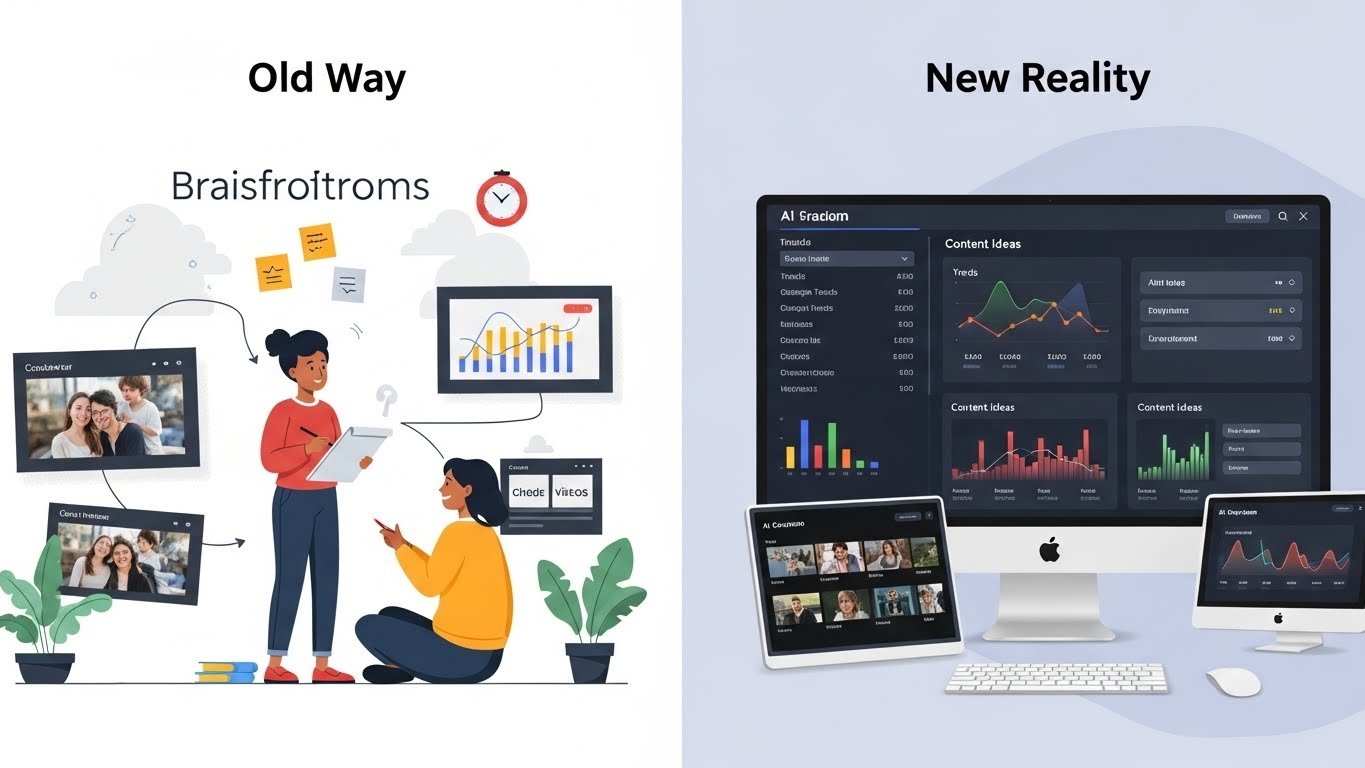
The Old Way vs. The New Reality
Before we had sophisticated recommendation engines and trend analysis tools, video content planning was largely instinctual. Creators would brainstorm based on personal interests, occasionally check what competitors were doing, and maybe glance at Google Trends. Some hit gold. Many more threw content at the wall hoping something would stick.
The landscape has shifted dramatically. Between YouTube, TikTok, Instagram Reels, and emerging platforms, creators are publishing an estimated 500 hours of video content every single minute on YouTube alone. Standing out requires more than creativity—it demands strategic intelligence.
This is where AI-powered content suggestion tools have become genuinely valuable. They process patterns that human creators simply cannot see at scale: trending topics before they peak, audience behavior shifts, competitive white space, and engagement predictors that help creators make smarter bets with their limited time and resources.
Understanding What AI Content Suggestions Actually Do
Let me break down the core functions, because there’s often confusion about what these systems actually provide.
Trend Prediction and Topic Discovery
The most immediately useful function is identifying what people are searching for and watching—both right now and in the near future. Tools like VidIQ, TubeBuddy, and platform-native analytics examine search volume trends, watch time patterns, and audience behavior signals to suggest topics with high potential.
A food creator I worked with was planning a series on “easy weeknight dinners” when her AI tool flagged something interesting: searches for “high protein meal prep” were climbing 340% month-over-month in her audience demographic. She pivoted, and that series became her most successful launch ever, bringing in viewers who never would have found her otherwise.
But here’s the nuance: the AI didn’t create the content idea. It surfaced an opportunity that she then applied her unique expertise and personality to. The technology suggested; she decided and executed.
Competitive Gap Analysis
One of the more sophisticated applications involves analyzing what competitors are doing—and more importantly, what they’re not doing.
AI tools can scan channels in your niche, identify the topics getting strong engagement, and then find related topics with high search interest but limited quality content. This “gap analysis” helps creators find opportunities where demand exists but supply is thin.
A tech reviewer I consult with discovered through gap analysis that while major channels extensively covered flagship smartphone reviews, there was significant unmet demand for comparison videos between mid-range devices. He built an entire content pillar around this gap and now dominates that search category.
Title and Thumbnail Optimization Suggestions
Titles and thumbnails are basically billboards for your content. Get them wrong, and nobody clicks. Get them right, and mediocre content can outperform better videos with weak packaging.
AI tools now analyze what’s working across millions of videos to suggest title structures, emotional triggers, and even color schemes that correlate with higher click-through rates. Some tools will score your thumbnail and suggest modifications based on contrast, face visibility, text readability, and other factors associated with engagement.
I’ll be honest—I was skeptical about this initially. It felt formulaic. But after watching a lifestyle creator increase her average CTR from 3.2% to 6.8% over three months using AI-guided thumbnail optimization, I became a believer. She wasn’t following the suggestions blindly; she was using them as a starting point and adding her own creative interpretation.
Audience Behavior Analysis
Perhaps the least flashy but most powerful function is deep audience understanding. AI systems analyze when your specific viewers are online, what other content they watch, how long they typically engage, and what triggers them to subscribe, share, or drop off.
This goes far beyond basic demographics. One travel creator discovered that her audience had high overlap with personal finance content—a connection that wasn’t obvious at all. She started incorporating budget travel tips and cost breakdowns into her videos, which significantly boosted watch time and attracted new viewers from finance-focused recommendations.
The Major Tools and Platforms in This Space
Without turning this into a product comparison, let me share observations from real-world usage.
YouTube Studio Analytics
The platform’s native analytics have become increasingly sophisticated. The new “Ideas” tab and trend insights features surface suggestions based on your channel’s performance and broader platform trends. It’s limited but valuable because it comes from the source.
VidIQ and TubeBuddy
These browser extensions have been around for years and remain workhorses for YouTube creators. Their AI features analyze keywords, suggest optimal posting times, and track competitive performance. The daily idea suggestions can feel hit-or-miss, but the keyword research and SEO optimization features are genuinely useful.
Morning Fame
This tool takes a more analytical approach, using machine learning to suggest topics based on your channel’s growth potential and competitive positioning. It’s particularly good at identifying what they call “opportunity keywords”—topics where you have a realistic chance of ranking.
Platform-Native Recommendation Engines
TikTok, Instagram, and YouTube all now provide creator-specific insights about trending sounds, formats, and topics within their creator tools. These tend to be the most current (since they come directly from the platforms) but least detailed.
Emerging AI-Powered Tools
Newer entries like Pictory, Jasper (for scripting), and various specialized tools are expanding what AI can suggest—from content repurposing opportunities to script frameworks based on top-performing videos in your niche.
Real Creator Stories: The Good and The Cautionary
The Success Story
A cooking channel I advised was stuck at around 120,000 subscribers for nearly two years. Views were stable but not growing. The creator, let’s call her Maria, was making the recipes she loved—which happened to be traditional Italian dishes.
When we started using AI trend analysis tools, patterns emerged. Her audience overlapped significantly with viewers interested in “quick cooking,” “meal prep,” and “budget meals”—none of which characterized her content. She wasn’t making bad videos; she was serving a different need than her audience actually had.
Maria didn’t abandon Italian cooking—that was her identity. Instead, she started creating “30-Minute Italian Weeknight Dinners” and “Italian Meal Prep for the Week” content. Same cuisine, different format and framing.
Within eight months, she crossed 300,000 subscribers. The AI didn’t change who she was as a creator; it helped her find the intersection between her passion and her audience’s needs.
The Cautionary Tale
On the flip side, I watched a fitness creator completely lose his identity chasing AI-suggested trends. Every week brought new topics—kettlebells, then calisthenics, then mobility work, then nutrition breakdowns. His suggestions were technically solid, but his channel became a fragmented mess with no coherent identity.
His core audience—people who had subscribed for his specific approach to home workouts—started leaving. New viewers didn’t stick because there was no clear value proposition. He was optimizing for trends while sacrificing what made him unique.
He eventually course-corrected, using AI suggestions as one input among many rather than his primary content strategy. But it cost him nearly a year of growth and significant audience trust.
The Practical Workflow: How Creators Should Actually Use These Tools
Based on working with dozens of creators, here’s a realistic workflow that balances AI insights with creative judgment.
Phase 1: Discovery and Research
Start each content planning cycle by pulling AI-generated topic suggestions. Don’t just look at the top recommendations—dig into the why. What search trends are driving these suggestions? What competitive gaps are they identifying?
I recommend maintaining a running list of potential topics, adding AI suggestions alongside your own ideas. Rate each one on two dimensions: strategic potential (according to the data) and personal interest/expertise. The sweet spot is topics that score high on both.
Phase 2: Validation and Refinement
Before committing to any topic, validate it. Look at what content already exists—is it genuinely lacking, or is the AI missing something? Search YouTube directly for the suggested terms and watch what’s ranking. Are these videos getting engagement? Are the comments suggesting unmet needs?
AI suggestions are hypotheses, not guarantees. Treat them accordingly.
Phase 3: Strategic Selection
Choose topics that:
- Have validated demand (search volume, trend direction)
- Align with your channel’s identity and expertise
- Fill gaps in the competitive landscape
- Build on your existing content library (related videos, playlists)
Don’t chase every trend. Be selective. A focused channel with clear identity beats a scattered one chasing algorithms.
Phase 4: Execution with Optimization
Use AI tools to refine titles, descriptions, and tags during production. Test thumbnail options with available tools. But remember—optimization cannot fix fundamentally flawed content. The core video still needs to deliver value.
Phase 5: Analysis and Learning
After publishing, use AI-enhanced analytics to understand performance. What worked? What didn’t? Feed these insights back into your discovery process for the next cycle.
This creates a learning loop where AI and human judgment compound over time.
The Limitations We Can’t Ignore
I’d be giving you incomplete advice if I didn’t address where AI content suggestions fall short.
They Can’t Predict Virality
No AI system can reliably predict which specific videos will go viral. They can identify topics with potential and optimize for discoverability, but the chaotic, emotional, often illogical factors that make something explode across the internet remain beyond algorithmic prediction.
They Lag Behind True Innovation
AI systems learn from existing data. By definition, they’re better at identifying patterns in what’s already working than predicting what’s genuinely new. If you’re trying to create something that doesn’t exist yet—a new format, a new niche, a new angle—AI suggestions may actively steer you away from innovation.
The most original creators I know use AI tools for research but trust their gut for truly novel ideas.
They Don’t Understand Your Unique Context
An AI tool doesn’t know that you’re burned out on a particular topic, that you lack equipment for certain video styles, or that a suggested topic conflicts with your values. It optimizes for engagement metrics, not for your creative sustainability or personal brand coherence.
They Can Create Homogenization
When everyone in a niche uses similar AI tools pointing to similar opportunities, content can start looking identical. The competitive gap you identified? A dozen other creators saw the same suggestion.
This is why human creativity, personality, and perspective remain essential. AI can point you to the right neighborhood; making content that stands out within that neighborhood requires human distinctiveness.
Data Quality Varies Widely
These tools are only as good as their data sources and algorithms. I’ve seen suggestions that were outdated, based on irrelevant audience segments, or simply wrong. Always cross-reference AI suggestions against your own platform research.
The Ethical Dimensions Worth Considering
This feels important to address, even though it’s not always discussed in creator circles.
Audience Manipulation vs. Service
There’s a line between serving your audience’s interests and manipulating them for engagement. AI tools optimized purely for clicks can push creators toward sensationalism, emotional manipulation, or outrage-bait.
The creators I respect most ask not just “what will get clicks?” but “what does my audience actually need?” These questions sometimes have different answers.
Authenticity in an Optimized World
When every title, thumbnail, and topic is AI-optimized, where does authentic creative expression fit? I don’t think there’s a simple answer here, but it’s worth wrestling with.
My take: use optimization at the discovery and packaging layers, but protect your creative core. The actual video content—your personality, perspective, and production choices—should remain authentically yours.
Credit and Originality
If AI tools are suggesting similar topics to many creators simultaneously, questions of originality become more complex. Did you create that content idea, or did you execute an idea that emerged from software? Does it matter?
For what it’s worth, I believe execution is where real value lives. Ideas are cheap; bringing them to life with skill and personality is what matters. But it’s worth being honest about where ideas originate.
Looking at What’s Coming
The trajectory is pretty clear. AI content suggestions will become more sophisticated, more personalized, and more integrated into creation workflows.
Predictive Pre-Production
Emerging tools already suggest not just topics but optimal video lengths, ideal posting times, and even script structures based on top performers. This will deepen, with AI offering increasingly detailed production guidance.
Real-Time Adjustment
Imagine AI tools that analyze your video’s first-hour performance and immediately suggest promotion strategies, community post angles, or follow-up content. This kind of real-time strategic adjustment is already in development.
Cross-Platform Strategy
As creators increasingly work across multiple platforms, AI tools will become better at suggesting how to repurpose, reformat, and redistribute content for maximum impact across YouTube, TikTok, Instagram, and whatever emerges next.
Integration with Production Tools
The line between AI suggestions and AI production assistance is blurring. Tools that suggest topics will increasingly integrate with tools that help write scripts, generate thumbnails, and even edit video. The entire workflow will become more AI-assisted.
Practical Recommendations for Different Creator Levels
For Beginners (Under 1,000 Subscribers)
Honestly? Don’t over-invest in AI tools yet. You’re still finding your voice, and your audience is too small to generate meaningful data for personalized recommendations.
Focus on fundamentals: consistent content, improving your craft, building a sustainable production routine. Use free tools like YouTube Studio and Google Trends for basic research, but prioritize creation over optimization.
For Growing Channels (1,000-100,000 Subscribers)
This is where AI content tools start paying off. You have enough data for meaningful insights, and you’re at a stage where strategic topic selection significantly impacts growth.
Invest in one solid tool (VidIQ or TubeBuddy are good starting points) and commit to actually using it. Build the research workflow I described earlier into your regular planning process. Track what works over time.
For Established Creators (100,000+ Subscribers)
At this level, you probably have the resources for more sophisticated tools and potentially even custom analytics solutions. The game shifts from growth hacking to audience retention and monetization optimization.
Use AI tools not just for topic suggestions but for audience segmentation, content pillar development, and strategic planning at a higher level. Consider how AI insights can inform not just your next video but your next year of content.
Final Thoughts: Tools Serve Vision, Not The Other Way Around
After years in this space, here’s what I’ve come to believe: AI content suggestion tools are genuinely powerful, but they work best for creators who already have a clear vision and identity.
If you know who you are, what value you provide, and who you’re serving, AI tools can help you do all of that more effectively. They can surface opportunities you’d miss, optimize execution details you’d overlook, and accelerate growth that would otherwise take longer.
But if you don’t have that foundation—if you’re just chasing algorithms and optimizing for metrics without a deeper purpose—AI tools will accelerate you toward nowhere in particular.
The most successful creators I know treat AI suggestions the way a skilled carpenter treats power tools: essential for efficiency, valuable for precision, but always in service of a design that came from human vision and judgment.
Use these tools. They’re remarkable. But never forget that you’re the creator, not the algorithm. The technology serves your vision, not the other way around.
And honestly? Your audience subscribed for you, not for optimized keyword targeting. Keep that human element front and center, and the AI stuff will enhance rather than replace what makes your content worth watching.