
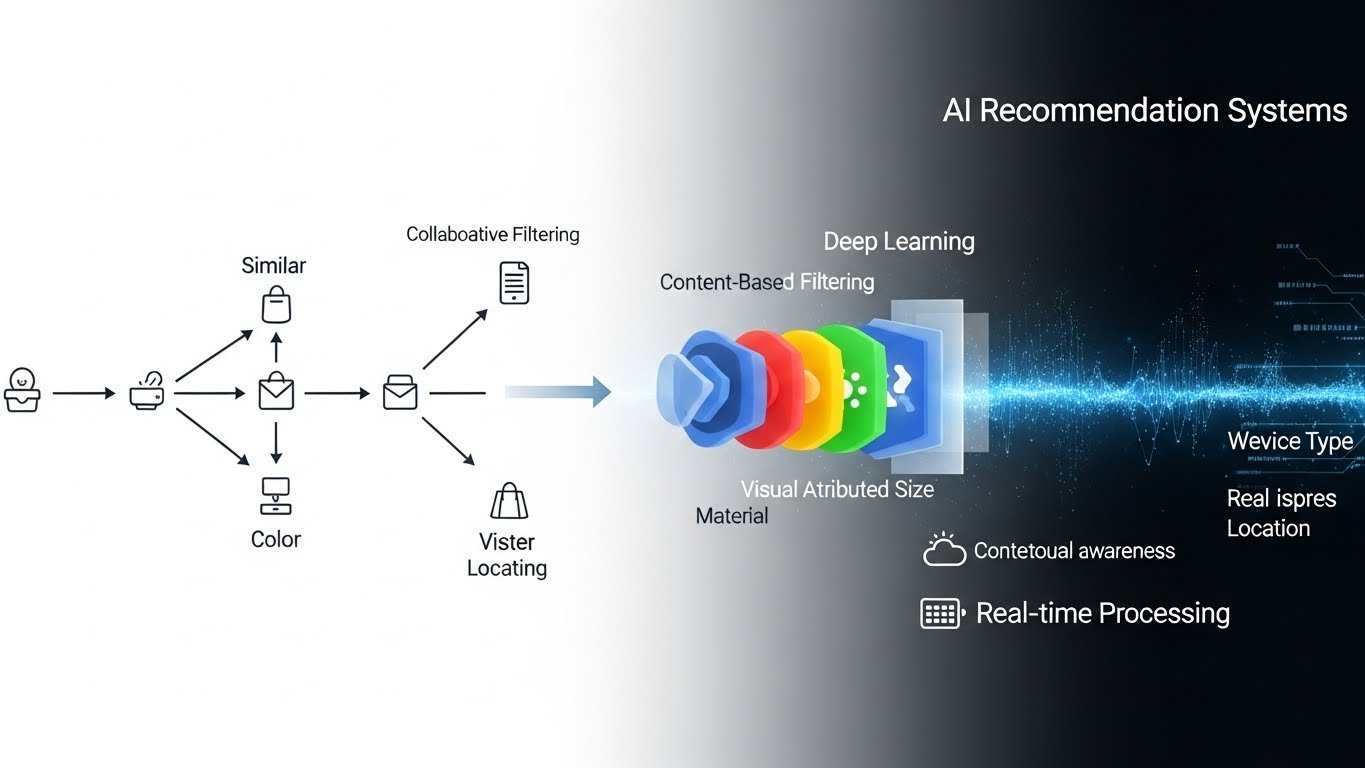
I still remember the first time I implemented a product recommendation engine for an e-commerce client back in 2019. We were using a basic rules-based system that suggested products based on simple “if-then” logic. Customers who bought running shoes would see running socks. It worked, sure, but the conversion lift was modest at best—maybe 3-4%.
Fast forward to today, and the recommendation landscape looks entirely different. The AI-powered tools available now can analyze hundreds of behavioral signals in real-time, predict what a customer wants before they know it themselves, and deliver personalized suggestions that genuinely feel helpful rather than intrusive.
After spending the past five years testing, implementing, and optimizing various recommendation platforms across retail, media, and SaaS companies, I’ve developed strong opinions about what works, what doesn’t, and which tools deserve your attention in 2026.
Why Product Recommendations Have Become Non-Negotiable
Let’s get the numbers out of the way because they matter. According to data I’ve seen across my client base, personalized product recommendations typically drive between 10-31% of total e-commerce revenue. That’s not a rounding error—that’s the difference between profitability and struggling to break even.
But here’s what the statistics don’t capture: the customer experience improvement. When recommendations are genuinely helpful, people spend more time on your site. They discover products they wouldn’t have found through navigation. They feel understood rather than targeted.
I worked with a mid-sized outdoor gear retailer last year who had avoided recommendation technology for years, worried it would feel “creepy” to their privacy-conscious customer base. After implementing a thoughtful recommendation strategy, their customer satisfaction scores actually increased. Why? Because customers appreciated not having to wade through thousands of products to find what they needed.
The tools have gotten that good.
The Evolution from Rules to Intelligence
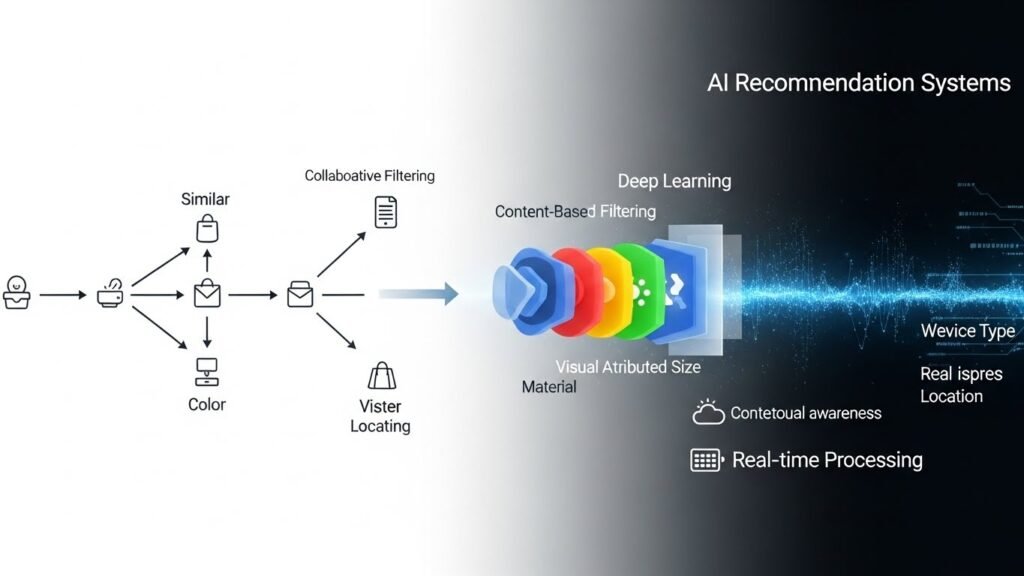
Before diving into specific platforms, it’s worth understanding what separates modern AI recommendation engines from their predecessors.
Traditional recommendation systems operated on collaborative filtering alone—essentially finding patterns like “customers who bought X also bought Y.” While still valuable, this approach misses enormous context. It doesn’t know that I’m shopping for a gift, that I’m price-sensitive today, or that I’ve been browsing winter jackets for the past week without purchasing.
Contemporary AI recommendation tools combine multiple approaches:
Collaborative filtering still forms the foundation, but now with much more sophisticated algorithms that can handle sparse data and cold-start problems.
Content-based filtering analyzes product attributes—color, size, material, style, price point—to find similar items that match demonstrated preferences.
Deep learning models process sequential behavior, understanding that the order in which someone views products reveals intent. Someone who looks at budget laptops, then mid-range, then premium is on a different journey than someone who starts at premium.
Contextual awareness factors in device type, time of day, location, and even weather to fine-tune suggestions.
Real-time processing means the recommendations update instantly as behavior changes, not overnight in a batch process.
This combination is what enables truly intelligent product discovery.
The Best AI Recommendation Tools: An Honest Assessment
I’ve worked hands-on with most of these platforms, and I’ve consulted on implementations for others. My assessments reflect real-world performance, not marketing claims.
Dynamic Yield: The Enterprise Powerhouse
If budget isn’t your primary constraint and you need a comprehensive personalization platform, Dynamic Yield remains the gold standard in my experience.
Acquired by Mastercard in 2022, Dynamic Yield offers far more than product recommendations—it’s a full personalization suite that includes audience segmentation, A/B testing, content personalization, and messaging. But its recommendation engine is genuinely impressive.
What sets it apart is the algorithmic flexibility. You’re not locked into one model. You can blend collaborative filtering, trending products, recently viewed items, and business rules—then let the system automatically optimize which approach works best for each customer segment.
I implemented Dynamic Yield for a fashion e-commerce company with about $50 million in annual revenue. Within six months, recommendation-driven revenue increased from 15% to 24% of total sales. The homepage alone generated 40% more engagement because we could serve genuinely personalized content rather than generic featured products.
Strengths:
- Sophisticated algorithmic options
- Excellent A/B testing integration
- Strong customer success support
- Works across web, mobile, and email
Limitations:
- Expensive—you’re looking at $30,000+ annually for mid-sized implementations
- Can be complex to implement fully
- Overkill for smaller operations
Best for: Enterprise retailers with dedicated personalization teams and substantial traffic.
Nosto: The E-Commerce Specialist
Nosto has carved out a strong position serving mid-market e-commerce companies, particularly those on Shopify Plus, Magento, and BigCommerce.
What I appreciate about Nosto is its focus. It’s not trying to be everything—it’s trying to be excellent at e-commerce personalization. The platform combines product recommendations with merchandising controls, giving you the ability to override AI suggestions when business logic demands it (like pushing excess inventory or new arrivals).
The visual merchandising capabilities deserve special mention. You can actually see how recommendations will look before publishing, which sounds basic but is surprisingly rare. The image recognition feature, which can analyze product photos to find visually similar items, has proven particularly valuable for fashion and home goods clients.
One furniture retailer I advised implemented Nosto specifically for visual similarity. A customer looking at a mid-century modern coffee table would see other pieces that matched that aesthetic, even if they were categorized differently in the product database. It solved a merchandising problem they’d struggled with for years.
Strengths:
- Strong e-commerce platform integrations
- Intuitive interface for merchandisers
- Visual similarity features
- Reasonable price point for mid-market
Limitations:
- Less sophisticated than enterprise tools for complex personalization
- Limited customization of underlying algorithms
- Analytics could be more robust
Best for: E-commerce companies doing $5-100 million in revenue who want solid recommendations without massive implementation complexity.
Algolia Recommend: The Search-First Approach
Algolia made its name in site search, and its recommendation product launched more recently. But there’s a compelling logic to their approach: search and recommendations are fundamentally related discovery problems.
If you’re already using Algolia for search (and many e-commerce sites are—it’s excellent), adding Recommend creates a unified discovery experience. The same understanding of product relevance that powers search results informs recommendations.
The developer experience is notably strong. The API is well-documented, the SDKs are maintained, and the implementation is relatively straightforward if you have engineering resources. This isn’t a drag-and-drop solution, but it offers more control than most plug-and-play options.
I worked with a specialty electronics retailer that implemented Algolia Recommend after already using their search product. The integration went smoothly precisely because the same product data fed both systems. Customers who searched for “wireless headphones” would see recommendations that understood their interest in audio quality, price range, and brand preferences demonstrated through search behavior.
Strengths:
- Excellent API and developer tools
- Works beautifully with Algolia Search
- Transparent about how recommendations work
- Strong performance even with smaller catalogs
Limitations:
- Requires technical resources to implement
- Newer product, still maturing
- Less out-of-box merchandising control
Best for: Technical teams who want control and already use (or plan to use) Algolia Search.
Clerk.io: The Underrated Contender
Clerk.io doesn’t get the attention of bigger platforms, but I’ve been consistently impressed with their results-to-price ratio.
This Danish company focuses on e-commerce personalization with an approach that combines search, recommendations, and email marketing. What I appreciate is their honesty about what their technology can and can’t do—there’s no overselling of capabilities.
The “Wisdom of the Crowd” algorithm analyzes not just what customers buy, but how they browse. It builds recommendation models that reflect the actual decision-making process rather than just outcomes. For a beauty retailer I worked with, this meant recommendations understood that someone comparing three different moisturizers was likely more interested in skin type suitability than brand loyalty.
Implementation is straightforward—typically 1-2 weeks for a standard Shopify or WooCommerce store—and pricing scales reasonably with traffic.
Strengths:
- Excellent value for mid-sized retailers
- Easy implementation
- Solid email integration
- Transparent pricing
Limitations:
- Less sophisticated than enterprise tools
- Fewer integration options
- Support is limited to European business hours
Best for: SMB e-commerce companies who want results without massive investment.
Amazon Personalize: The AWS Option
If your technical team lives in the AWS ecosystem, Amazon Personalize offers a different approach—it’s a machine learning service for building recommendation systems rather than a plug-and-play solution.
This distinction matters. Personalize gives you the same recommendation technology that powers Amazon’s own massive retail operation, but you need to bring your own data, integration, and interface. It’s not a SaaS product you log into; it’s infrastructure you build on.
The flexibility is remarkable. You can train models on any behavioral data—not just purchases, but views, searches, app engagement, or even offline interactions. A media company I consulted for used Personalize to recommend articles based on reading completion rates, not just clicks. That subtle difference dramatically improved content recommendations because it optimized for genuine interest rather than clickbait.
Strengths:
- Incredibly flexible
- Scales infinitely
- Pay-for-what-you-use pricing
- Access to sophisticated algorithms
Limitations:
- Requires significant technical investment
- No user interface for merchandisers
- You’re building, not buying
- Can get expensive at scale
Best for: Technical teams who need custom recommendation logic and have the resources to build and maintain it.
Bloomreach: The Content Commerce Platform
Bloomreach has evolved significantly, acquiring Exponea to create what they call a “commerce experience cloud.” Their recommendation engine is part of a broader platform that includes search, SEO, and content management.
The strength here is in connecting content and commerce. If your business relies heavily on content marketing—recipes for a food retailer, tutorials for a craft store, style guides for fashion—Bloomreach can weave product recommendations into that content intelligently.
I’ve seen this work particularly well for brands with complex customer journeys. A kitchenware company I advised had extensive recipe content. Bloomreach could recommend not just related products but specific items used in recipes customers were viewing, at the right moment in the cooking content journey.
Strengths:
- Strong content-commerce integration
- Sophisticated CDP capabilities
- Excellent for content-heavy retail
- Good enterprise support
Limitations:
- Expensive
- Complex implementation
- Overkill if you just need recommendations
- Requires commitment to their ecosystem
Best for: Enterprise commerce companies with significant content marketing investments.
Vue.ai: The Visual Commerce Specialist
Vue.ai takes a different approach, using computer vision and visual AI to power recommendations. For fashion, home goods, and any category where visual presentation matters, this creates genuinely differentiated suggestions.
Their “Stylist” feature can recommend complete outfits based on a single item, understanding that a floral summer dress pairs well with certain sandals, bags, and accessories. It’s not pattern-matching from purchase data—it’s actually understanding visual style.
A women’s fashion retailer I worked with saw their average order value increase 18% after implementing Vue.ai’s outfit recommendations. Customers who came for a dress left with matching accessories they hadn’t considered.
Strengths:
- Unique visual AI capabilities
- Strong outfit/bundle recommendations
- Product tagging automation
- Distinctive technology
Limitations:
- Best suited for visual categories
- Pricey for smaller retailers
- Less proven in non-fashion categories
- Implementation requires good product imagery
Best for: Fashion, jewelry, home decor, and other visually-driven retailers.
Recombee: The Developer-Friendly Choice
Recombee positions itself as an AI recommendation engine for developers, and that’s exactly what it is. Clean APIs, comprehensive documentation, and a focus on algorithmic performance rather than business user interfaces.
What impresses me about Recombee is their intellectual honesty about recommender systems. Their documentation explains why certain approaches work better for different scenarios, helping teams make informed decisions rather than just trusting a black box.
Pricing is straightforward and usage-based, making it accessible for startups. A SaaS company I advised implemented Recombee to recommend articles and resources to users based on their product usage patterns. Because everything was API-driven, they could integrate recommendations directly into their application flow rather than relying on widget overlays.
Strengths:
- Excellent API design
- Transparent algorithms
- Affordable for growing companies
- Works beyond e-commerce
Limitations:
- No visual interface
- Requires development resources
- Less e-commerce-specific
- Limited built-in analytics
Best for: Technical teams building recommendation experiences into custom applications.
Crossing Minds: The Taste-Based Recommender
Crossing Minds has positioned itself around “taste” recommendations—understanding not just what customers buy but why they prefer certain products over others.
Their approach is particularly interesting for media and subscription businesses. Rather than just looking at what content someone consumed, they try to understand taste dimensions—do you prefer complex narratives? Fast-paced action? Philosophical themes?
I haven’t implemented Crossing Minds directly, but I’ve reviewed implementations at several media companies. The common feedback is that recommendations feel more intuitive—like getting suggestions from a friend who knows your taste rather than an algorithm that knows your history.
Strengths:
- Sophisticated taste modeling
- Works well for media and subscriptions
- Privacy-conscious approach
- Thoughtful algorithmic design
Limitations:
- Less proven in traditional retail
- Newer platform
- Limited enterprise deployments
- Requires quality data to work well
Best for: Media companies, subscription boxes, and businesses where taste matters more than transactions.
Implementation Reality: What They Don’t Tell You
Having implemented a dozen recommendation systems, I can tell you that the technology is often the easy part. Here’s what typically determines success or failure:
Data Quality Trumps Algorithm Sophistication
I’ve seen simple recommendation engines outperform sophisticated ones because the simpler system had better data. Before choosing a platform, audit your product data. Are descriptions complete? Are categories consistent? Are images high-quality? Are attributes accurate?
A home goods retailer I worked with had products categorized by internal SKU logic rather than customer-facing categories. A beautiful “wooden cutting board” was classified as “KIT-WD-CTBRD-12” which told the recommendation engine nothing useful. We spent three months fixing data before the recommendation engine could do its job.
Merchandiser Buy-In Is Essential
The best recommendation engine in the world will fail if your merchandising team doesn’t trust it. They’ll override suggestions constantly, create conflicting rules, and ultimately undermine the system.
Get merchandisers involved early. Show them how the recommendations work. Give them appropriate controls. Let them understand why the AI makes certain suggestions. When they trust the system, they enhance it rather than fight it.
Start Simple, Then Optimize
I’ve watched companies try to implement every recommendation type simultaneously—homepage, product page, cart, email, push notifications—and fail at all of them. Start with one high-impact placement, get it working well, measure results, then expand.
For most e-commerce sites, product detail page recommendations (“You might also like”) provide the clearest testing ground. Traffic is high, intent is clear, and you can measure impact directly.
The Cold Start Problem Is Real
Every platform claims to handle new customers and new products gracefully. In practice, this remains challenging. New visitors without behavioral history get generic recommendations. New products without purchase history don’t get surfaced.
Have strategies ready. For new visitors, use contextual signals—what device are they using? What marketing campaign brought them? Where are they located? For new products, use content-based features aggressively until behavioral data accumulates.
Measuring What Matters
The obvious metrics—click-through rate on recommendations, revenue from recommended products—matter. But they’re not the whole picture.
Incremental revenue is what truly matters. If someone came to buy a specific product and would have bought it anyway, the recommendation didn’t add value. Measure whether recommendations drive additional purchases or higher average order values.
Customer lifetime value improvements often emerge months after implementation. Better recommendations mean better first experiences, which mean higher retention. Track cohort performance over time.
Discovery metrics reveal whether recommendations help customers find products they wouldn’t have found otherwise. If recommendations just surface best-sellers, they’re not adding much value. Monitor how many recommendation-driven purchases are for products outside each customer’s previous purchase categories.
Ethical Considerations That Actually Matter
I’d be remiss not to address the ethical dimensions of AI-powered recommendations, because they’re becoming increasingly important—both morally and legally.
Transparency matters more than you might think. Customers don’t need to understand your algorithms, but they shouldn’t be deceived about why they’re seeing certain recommendations. “Recommended for you based on your browsing” is honest. “Other customers loved this” when it’s actually a promoted placement is not.
Filter bubbles can limit discovery if recommendations become too narrow. If someone buys running shoes once, they shouldn’t see only running products forever. Build exploration into your recommendation strategy deliberately.
Privacy regulations like GDPR and CCPA require proper consent and data handling. Make sure your recommendation platform supports necessary compliance features—data deletion requests, consent management, and transparent data processing.
Algorithmic bias can emerge unexpectedly. If your training data reflects historical biases, recommendations will perpetuate them. Regularly audit recommendations across demographic segments.
Making the Choice: A Framework
After working with so many platforms, I’ve developed a simple framework for choosing the right one:
If you’re an enterprise retailer with substantial resources and complex needs, Dynamic Yield or Bloomreach will serve you well. Budget accordingly—you’re looking at six figures annually.
If you’re a mid-market e-commerce company wanting solid results without massive complexity, Nosto or Clerk.io offer the best balance of capability and accessibility.
If you have strong technical resources and want control, Algolia Recommend or Amazon Personalize give you building blocks to create custom experiences.
If visual merchandising matters for your category, Vue.ai offers genuinely differentiated technology.
If you’re building custom applications beyond traditional e-commerce, Recombee provides the flexibility you need.
Don’t overweight features you won’t use. A simpler tool implemented well will outperform a sophisticated tool implemented poorly every time.
The Road Ahead
Product recommendation technology continues advancing rapidly. The next wave will likely bring better understanding of intent (not just behavior), improved handling of privacy-conscious customers who limit data sharing, and stronger integration with conversational commerce.
But the fundamental challenge remains unchanged: helping customers find products they’ll love, efficiently and without manipulation. The best AI recommendation tools succeed not by being clever, but by being genuinely helpful.
That’s what I’ve learned after five years in this space. The technology is impressive, but it’s ultimately in service of a simple human goal—connecting people with products that make their lives better. Keep that focus, choose tools that support it, and the results will follow.
Looking to implement product recommendations for your business? Start by auditing your product data quality and defining clear success metrics. The platform choice matters less than the foundation you build it on.