
I remember the first time I truly noticed personalization done right. It was 2019, and I was browsing an outdoor gear website for a new hiking backpack. The next morning, my email inbox contained not just a reminder about the backpack I’d abandoned in my cart—that’s table stakes these days—but a curated selection of trail maps, hiking boot recommendations that matched my preferred terrain type, and even a weather-appropriate base layer suggestion based on the region I’d previously searched. That wasn’t just marketing. That was a conversation.
After spending the better part of a decade consulting for e-commerce brands ranging from scrappy startups to Fortune 500 retailers, I’ve watched AI-powered personalization evolve from a buzzword into the backbone of digital commerce. What used to require armies of analysts and educated guesses now happens in milliseconds, powered by algorithms that learn, adapt, and predict with sometimes unsettling accuracy.
But here’s the thing nobody tells you about personalization technology: it’s not magic, and it’s definitely not perfect. Let me walk you through what’s actually happening behind the scenes, where it works brilliantly, where it falls flat, and what it means for both businesses trying to implement it and consumers navigating this increasingly tailored digital landscape.
What AI Personalization Actually Looks Like in Practice
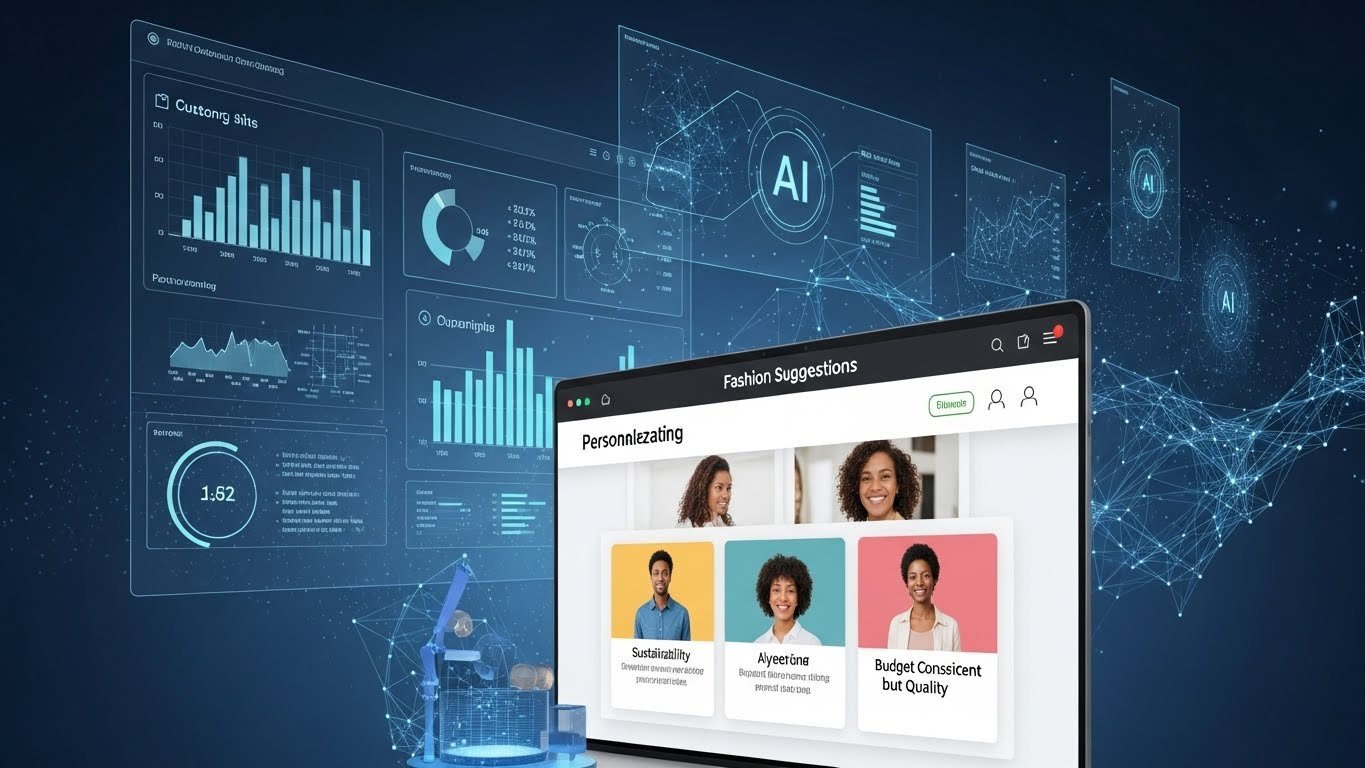
When we talk about AI-powered personalization in e-commerce, we’re really discussing a spectrum of technologies that work together to create individualized shopping experiences. Forget the sci-fi imagery. This is fundamentally about pattern recognition applied at scale.
At its core, personalization engines analyze customer data—browsing history, purchase patterns, demographic information, even the time of day someone shops—to serve up relevant content, products, and experiences. The “AI” part comes in when these systems move beyond simple rule-based logic (“if customer bought X, show Y”) into genuine machine learning territory, where algorithms identify complex patterns and make predictions that no human team could reasonably program in advance.
Consider how Netflix recommends shows based on viewing patterns across millions of users, not just your individual history. E-commerce personalization works similarly. The system might notice that customers who browse sustainable products on Tuesday evenings, spend more than 3 minutes on product pages, and typically purchase items priced between $50-150 respond exceptionally well to free shipping offers displayed prominently in the header. That’s not a rule anyone wrote. That’s a pattern the algorithm discovered.
I worked with a mid-sized fashion retailer last year that implemented a fairly sophisticated personalization platform. Within six months, their average order value increased by 23%, and their email open rates nearly doubled. But the interesting part wasn’t the top-line numbers—it was watching the system discover things about their customers that contradicted years of assumptions. Turns out, their “budget-conscious” segment wasn’t actually price-sensitive; they were quality-obsessed and needed more detailed product specifications to convert.
The Engine Room: How These Systems Actually Work
Without getting too deep into technical weeds, understanding the basic mechanics helps separate genuine personalization from glorified email list segmentation.
Modern e-commerce personalization typically relies on several interconnected components:
Collaborative filtering remains a workhorse. This is the “customers who bought this also bought” logic, but amplified. Instead of looking at direct product relationships, sophisticated systems analyze latent factors—hidden patterns that connect products through user behavior in ways that aren’t immediately obvious. A customer might never realize that people who buy French press coffee makers also disproportionately purchase hardcover fiction, but the algorithm notices and acts on it.
Content-based filtering takes a different approach, analyzing the attributes of products a customer has shown interest in and finding similar items. This is particularly valuable in categories with extensive inventories where customers might not know exactly what they’re looking for. If someone gravitates toward minimalist design, natural materials, and Scandinavian aesthetics across multiple categories, the system builds a style profile that informs every product recommendation.
Real-time behavioral analysis is where things get genuinely impressive—and where most smaller retailers struggle to keep up. Enterprise-level platforms can analyze session behavior as it happens, adjusting what a customer sees based on scroll depth, hover patterns, time on page, and dozens of other micro-signals. A customer who lingers on size charts probably needs reassurance about fit, while someone racing through product pages might respond better to urgency messaging.
Predictive modeling takes historical data and projects forward. What is this customer likely to want next? When will they need to repurchase? What’s their lifetime value potential? These aren’t hypothetical questions—they drive concrete business decisions about marketing spend, inventory, and pricing.
Real-World Applications That Actually Move the Needle
Let me share some concrete examples from my experience and publicly available case studies.
Dynamic Product Recommendations
Amazon reportedly drives 35% of its revenue through personalized recommendations. That statistic gets thrown around a lot, but the implications are staggering when you consider their scale. Their recommendation engine isn’t just showing “related products”—it’s making millions of micro-decisions per second about which of their billions of product combinations each customer is most likely to purchase.
Smaller retailers can access similar technology through platforms like Dynamic Yield, Nosto, or Clerk.io, though the sophistication gap remains significant. I’ve seen good results with even basic recommendation implementations, provided they’re placed strategically. The homepage is valuable real estate, but personalized recommendations in the cart and checkout flow often generate higher incremental revenue because purchase intent is already established.
Email and Marketing Automation
Personalized email remains one of the highest-ROI applications of e-commerce AI. Beyond just inserting someone’s first name into a subject line (please, we’re past that), modern platforms customize:
- Send times based on individual open patterns
- Product selection based on browsing history and predicted preferences
- Content blocks that rearrange based on engagement probability
- Subject lines tested and optimized at the individual level
A client in the home goods space was sending identical weekly newsletters to their entire list. After implementing dynamic content blocks and send time optimization, their email revenue contribution increased by 47% without adding a single new subscriber. Same list, smarter approach.
Search and Site Merchandising
Personalized search is wildly underutilized, in my opinion. When a customer types “dress” into a search bar, what they see should depend heavily on who they are. A first-time visitor might see bestsellers and highly-rated products. A returning customer who’s previously purchased formal attire should see different results than one whose history suggests casual style preferences.
Similarly, category page merchandising—the order products appear, what filters are highlighted, even what’s shown above the fold—can be personalized based on predicted relevance. Sephora does this exceptionally well, surfacing brands and product types aligned with a customer’s established preferences while still introducing discovery opportunities.
Pricing and Promotions
This gets ethically murky, but it’s happening. Dynamic pricing that adjusts based on demand, inventory, competitive positioning, and yes, customer attributes, is increasingly common. Airlines and hotels have done this for years; e-commerce is catching up.
I’ve seen more defensible applications in personalized promotions—showing discount offers only to customers who genuinely need incentives to convert while protecting margins on customers who would purchase anyway. It works, but it requires careful implementation to avoid customer backlash when people compare notes.
The Other Side of the Coin: Limitations and Failures
Here’s where I’m supposed to be balanced, and honestly, the limitations are significant.
The cold start problem remains unsolved. When you have zero data about a customer—new visitor, first session—personalization systems have nothing to work with. Some platforms use IP-based geographic inference or device type as rough proxies, but you’re essentially guessing until meaningful behavior accumulates. This is particularly painful for businesses with low repeat purchase rates.
Data quality issues torpedo more personalization initiatives than any technology limitation. I’ve walked into companies with customer databases that haven’t been deduplicated in years, product catalogs with inconsistent attributes, and tracking implementations that miss half of user sessions due to consent mechanisms. Garbage in, garbage out, no matter how sophisticated your algorithms.
The filter bubble problem gets philosophical, but it’s commercially relevant too. When personalization works too well, customers never discover products outside their established preferences. Recommendation systems can become echo chambers that limit exploration and, ironically, reduce long-term engagement. The best implementations deliberately introduce serendipity—showing products slightly outside a customer’s profile to test preferences and prevent stagnation.
Creepiness thresholds are real. There’s a line between helpful and invasive, and it varies by customer, category, and context. I’ve seen brands accidentally surface products that revealed they knew about sensitive situations—health conditions, relationship status changes, financial difficulties—that alienated customers permanently. The capability to personalize doesn’t always mean you should.
Diminishing returns kick in faster than vendors want to admit. Moving from no personalization to basic personalization typically shows dramatic improvements. Moving from good personalization to great personalization shows modest gains. Moving from great to excellent often costs more than it returns, at least in direct attribution terms.
Privacy, Ethics, and the Elephant in the Room
We need to talk about the uncomfortable stuff.
AI personalization runs on data. Lots of it. And the regulatory landscape has shifted dramatically in recent years. GDPR in Europe, CCPA in California, and a patchwork of emerging regulations worldwide have fundamentally changed what’s permissible. Cookie deprecation, while delayed, is still coming. Apple’s iOS privacy changes have already disrupted the cross-platform tracking that fueled many personalization systems.
Beyond compliance, there are genuine ethical questions. Is it acceptable to use predictive algorithms to identify vulnerable customers and target them with specific messaging? Is dynamic pricing that shows different customers different prices for identical products fundamentally fair? Where’s the line between personalization and manipulation?
I don’t have universal answers, but I’ve developed some principles through trial and error:
Transparency matters. Customers who understand they’re seeing personalized content tend to appreciate it more than those who feel surveilled. Some brands now include simple explainers like “Recommended because you recently viewed hiking gear” that demystify the process.
Value exchange should be obvious. When personalization genuinely helps customers find what they need faster, it’s a service. When it only serves to extract maximum revenue, customers eventually notice.
Opt-out mechanisms should be genuine. Not buried in settings, not technically compliant but practically invisible. Real choices that are respected.
Implementation Realities for Different Business Sizes
Not every e-commerce business needs or can support enterprise-level personalization. Here’s how I typically think about it:
For smaller businesses (under $5M annual revenue): Start with email segmentation and basic product recommendations. Platforms like Klaviyo, Mailchimp, or Shopify’s built-in tools offer meaningful personalization without requiring dedicated data science resources. Focus on getting the fundamentals right—accurate tracking, clean data, consistent customer identification—before investing in sophisticated tooling.
For mid-market businesses ($5M-$100M): You can justify dedicated personalization platforms and potentially some custom development. This is where A/B testing becomes essential—don’t trust vendor promises, measure everything. Consider starting with one or two high-impact use cases (abandoned cart recovery, homepage recommendations) and expanding based on proven results.
For enterprise ($100M+): You’re likely evaluating platforms like Adobe Target, Salesforce Commerce Cloud, or purpose-built solutions like Dynamic Yield or Monetate. The technology works, but organizational alignment often determines success or failure. Personalization at scale requires collaboration between marketing, merchandising, technology, and analytics teams that doesn’t happen automatically.
Regardless of size, start with clear hypotheses about what personalization should achieve. “More personalization” isn’t a goal. “Increase conversion rate among returning visitors by 15% through personalized product recommendations” is a goal you can actually measure and iterate against.
Looking Forward: What’s Changing and What Matters
The personalization landscape continues to evolve rapidly. Several trends are reshaping what’s possible and what’s prioritized:
Zero-party data is gaining importance as third-party cookies disappear. Brands are finding creative ways to collect explicit preference data—style quizzes, preference centers, interactive content—that customers willingly provide in exchange for better experiences. This data tends to be more reliable than inferred preferences anyway.
Generative AI is enabling more dynamic content personalization. Instead of selecting from pre-written variants, systems can now generate personalized product descriptions, email copy, and even visual content on the fly. Early implementations are rough, but the trajectory is clear.
Cross-channel consistency remains an aspiration for most brands but is increasingly achievable. A customer’s in-store experience should inform their online experience and vice versa. The technical barriers are falling; organizational silos are proving harder to dismantle.
Sustainability and ethical positioning are becoming differentiators. Some customers actively prefer brands that are transparent about data usage and conservative in personalization tactics. Ironically, being less aggressive with personalization can be a brand attribute that appeals to certain segments.
Final Thoughts
After years of watching personalization technology mature, I’ve arrived at a perhaps unsatisfying conclusion: the tools are less important than the thinking behind them.
The best personalization I’ve encountered comes from companies that deeply understand their customers, use technology to scale that understanding, and maintain genuine empathy for the shopping experience they’re creating. The worst personalization comes from companies that treat it as a technical implementation project, chase shiny platforms without clear objectives, and forget that there are actual humans on the receiving end.
AI-powered personalization in e-commerce isn’t inherently good or bad. It’s a capability. Used thoughtfully, it creates genuinely better shopping experiences—helping people find products they love, reducing decision fatigue, surfacing relevant options in overwhelming catalogs. Used carelessly, it erodes trust, invades privacy, and ultimately drives customers toward simpler alternatives.
The technology will only get more sophisticated. The question is whether our implementation wisdom will keep pace.
If you’re evaluating personalization for your business, start with customer understanding. Map the journey. Identify the friction points. Figure out where more relevance would genuinely help, not just where you could squeeze out incremental revenue. Build from there.
And for those of us on the consumer side of these systems? It’s worth remembering that personalization is a negotiation. The data we share, the brands we trust, the experiences we accept—these shape what the future of commerce looks like. Choose accordingly.